


Airbnb's Crackdown on Host Rules: Did Hosts Push Too Far?
Updated: 9 minutes ago

Airbnb hosts have every right to protect their properties. But across the short-term rental industry, host-imposed fines, increasingly burdensome checkout chores, and inconsistent rules have pushed reasonable standards a bridge too far. When one host charges $250 for a violation and another charges $1,000 for the same behavior at a similar property, guests are left navigating a patchwork of expectations and penalties that can feel arbitrary rather than fair.
As a professional vacation rental manager, I've encountered house rules that needed to be tightened to bring them in line with reasonable guest expectations. I've also seen why it's important to distinguish between a legitimate damage claim and a fine imposed simply because a host decided on a penalty. For instance, if a guest smokes in a non-smoking property and causes $150 in documented remediation costs, why impose an arbitrary $250 fine rather than pursue the actual damages through the appropriate claims process? The amounts should reflect legitimate costs - not simply what an individual host decides to charge in the form of a penalty or fine
Airbnb's November 20, 2026 policy changes are drawing a line around what hosts can require of their guests. Some hosts see this as another restriction on their ability to manage and protect their investments. But the bigger question is whether certain practices have created so much unnecessary guest friction that the industry needed a course correction.
When Host Rules and Penalties Become Part of the Problem
House rules serve a legitimate purpose. They communicate expectations, protect a property's condition, and help prevent problems before they occur. A rule prohibiting smoking or glitter, for example, may be entirely reasonable. But setting a rule is not the same as having a legitimate basis to charge a predetermined penalty when a guest violates that rule.
Consider glitter, a huge pet-peeve with Airbnb owners and managers. A host may prohibit it because it is difficult to remove and can create additional work for the cleaning team. If a guest leaves glitter throughout a property, the host may need to arrange additional cleaning, potentially disrupting the schedule for the next arrival. That is a real operational concern. The appropriate response is to assess the situation and document any legitimate additional costs - not automatically impose an arbitrary fine simply because the rule was broken.
The same principle applies to smoking, excessive mess, and other violations. If a guest's actions cause damage or require additional cleaning beyond the normal turnover, the host should document the condition, establish the actual cost, and use the appropriate Airbnb process to seek reimbursement where eligible. A request through Airbnb's Resolution Center is not the same as an approved reimbursement, and recovery is not guaranteed. But a documented claim tied to actual costs is more defensible than a penalty chosen without regard to the loss incurred.
A rule violation does not automatically equal a financial loss of a particular amount.
A $250 smoking penalty makes little sense if the documented remediation cost is $150. And if another host charges $1,000 for the same violation, what objective standard justifies that difference?
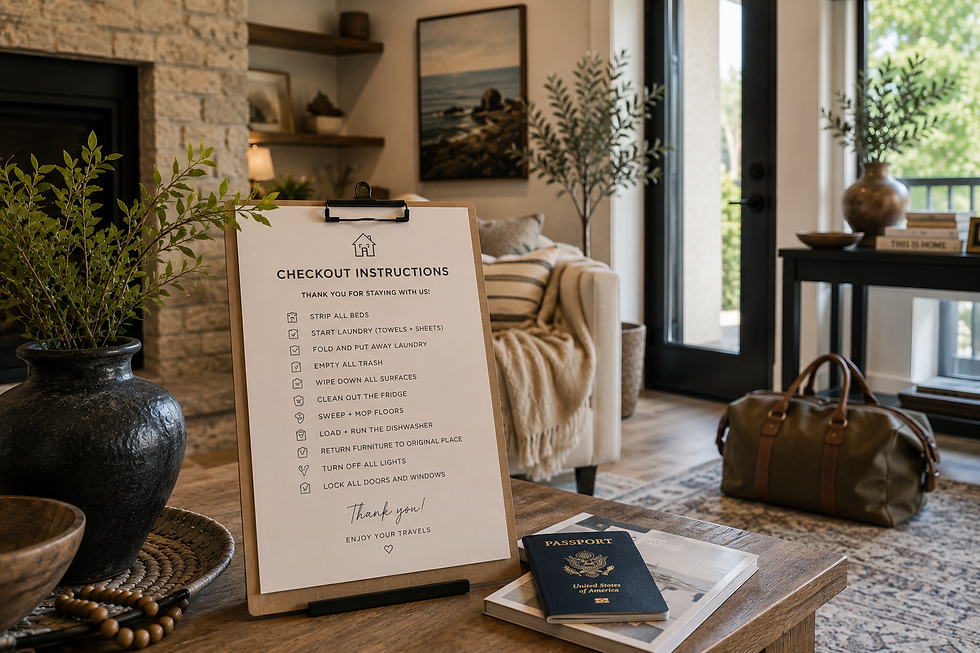
Excessive checkout chores raise a similar concern. Guests book vacation rentals for a place to stay, not to take on a second shift of housekeeping after paying a cleaning fee. In my July 2024 article, Short-Term Rental Checkout Chores Are Driving Guests Away, I discussed how burdensome checkout requirements can undermine the guest experience. Efficient turnover systems and professional cleaning operations, not increasingly long chore lists, are the better solution.
Hosts must recognize that protecting a property and providing a positive guest experience are not competing goals. Reasonable rules, consistent procedures, and a fair approach to documented losses can accomplish both. Arbitrary penalties and excessive demands risk doing the opposite.
Stay informed on STR trends, operational standards, and rental optimization
strategies shaping the industry.
The Short-Term Rental Industry Needs a Course Correction
In my experience working with vacation rental hosts, it's high time Airbnb held hosts to higher standards of professionalism and consistently enforced those standards. Hosts who repeatedly refuse to comply should face meaningful consequences, including removal from the platform when warranted. This isn't simply about restricting what hosts can do; it's about bringing greater accountability to an industry whose reputation has suffered from practices like excessive checkout chores, arbitrary penalties, and inconsistent
expectations. When hosts push reasonable boundaries too far, the consequences extend beyond their own properties and affect how travelers perceive short-term rentals as a whole.
Airbnb needs to hold hosts accountable - not just to protect its platform, but to protect the future and reputation of our entire industry.
Now Airbnb is drawing clearer boundaries, and hosts must take a hard look at their practices. The industry has reached the point where damage control is no longer optional.
Protecting an investment requires more than writing rules and attaching penalties. It requires reasonable standards, consistent procedures, clear communication, and a defensible approach to handling actual damage and additional costs. That's what professional property management should look like.
Owners who have the time, knowledge, and systems to manage their properties professionally can make those changes themselves. Those who struggle to navigate platform policies, establish reasonable procedures, or manage guest issues should seriously consider hiring a qualified vacation rental property manager. Professional management isn't simply about filling a calendar; it's about protecting the property, supporting a positive guest experience, and operating a sustainable business.
This is my interpretation of why Airbnb may be moving toward tighter limits on host-imposed rules and penalties. Only Airbnb can confirm the full reasoning behind its decisions. In my next article, I'll break down the November 20 policy changes in detail and explain what hosts need to review and how they can adapt so be sure to subscribe to the blog for the latest, in-depth analysis of these evolving changes.



Comments