


Short-Term Rental Checkout Chores Are Driving Guests Away
Updated: May 25
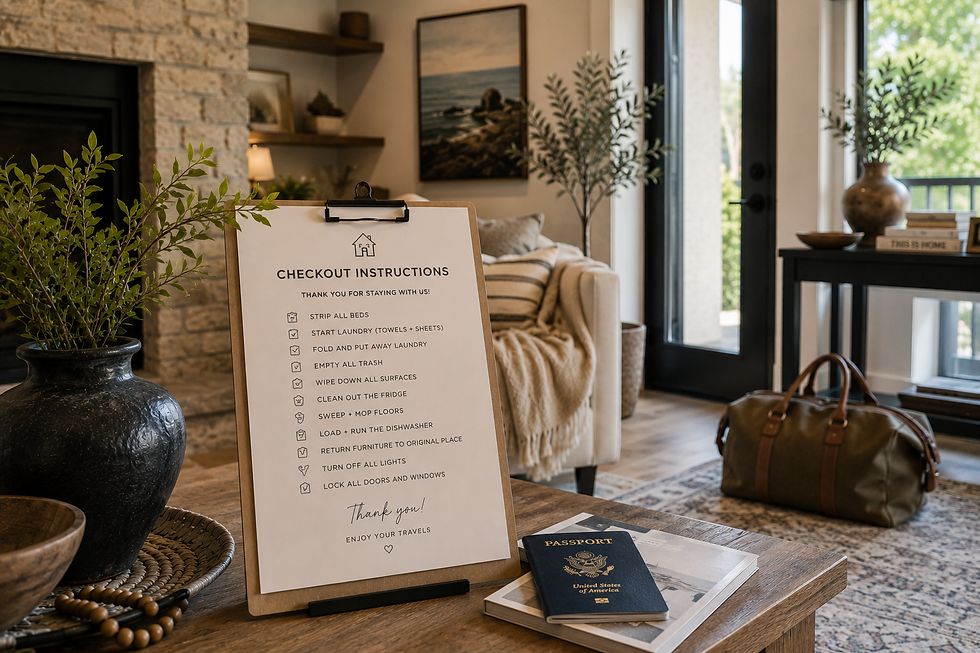
Airbnb guests are paying for accommodations, hospitality, and convenience. Increasingly, many are also paying substantial cleaning fees. That’s why short-term rental checkout chores asking guests to strip beds, start laundry, wipe counters, take out trash, load dishwashers, and begin turnover procedures are creating growing frustration across the short-term rental industry.
Basic checkout requests are reasonable. Locking doors, turning off lights, or placing used towels in one area is standard courtesy. But some Airbnb checkout lists have crossed the line from simple departure guidance into unpaid housekeeping labor.
And guests are noticing.
Checkout frustration has become one of the most common complaints travelers now associate with Airbnb stays.
One of the biggest operational mistakes many hosts make is assuming checkout happens after the guest experience ends. In reality, checkout is part of the experience. It is the guest’s final impression of the property, the host, and often the platform itself.
A smooth arrival creates booking confidence. A frustrating departure creates review hesitation.
This is part of the reason Airbnb has faced growing criticism in recent years surrounding excessive checkout expectations and cleaning fees. Guests increasingly compare short-term rentals against hotels, where checkout typically involves little more than leaving the room and returning a keycard.
The issue is not cleanliness standards. Professional cleaning standards matter enormously in hospitality. The problem is shifting too much operational responsibility onto paying guests while simultaneously charging cleaning fees that already imply turnover service is included.
Many hosts underestimate how much checkout friction impacts guest perception. Long instruction lists at departure can make an otherwise excellent stay feel transactional, stressful, or overly restrictive during the final moments of the experience.
And operationally, excessive checkout procedures are often solving the wrong problem.
If a property requires guests to perform substantial cleaning or turnover preparation in order for operations to function smoothly, the issue is usually workflow structure rather than guest behavior. Strong hospitality systems should reduce friction for guests, not create more of it.
Stay informed on STR trends, operational standards, and rental optimization strategies shaping the industry.
Reasonable Short-Term Rental Checkout Chores Still Matter
Most guests have no issue helping maintain basic respect for a property. Throwing away obvious trash, locking doors, or placing used towels in a designated area are normal expectations within hospitality accommodations.
The frustration begins when checkout instructions start resembling turnover procedures rather than departure guidance.
Asking guests to strip beds, start laundry, run multiple cleaning tasks, or complete extensive checkout lists while also charging cleaning fees creates a disconnect many travelers increasingly resent. In many cases, the issue is not the request itself. It is the accumulation of friction at the very end of the stay.
Strong hospitality experiences feel easy from arrival through departure. The best-operated Airbnb listings understand that operational efficiency should happen behind the scenes, not be transferred onto paying guests.
The strongest-performing short-term rentals typically prioritize simplicity at checkout. Clear communication, reasonable expectations, efficient turnover systems, and operational consistency create a smoother experience for both guests and hosts without making travelers feel responsible for property management tasks.
Guests generally want to leave properties respectfully. Most are not opposed to basic courtesy. But there is a significant difference between respectful departure expectations and asking paying travelers to participate in the turnover process itself.
Hospitality is supposed to reduce friction, not create more of it.
And increasingly, guests remember how checkout felt just as much as the stay itself.



Comments