


Why White Sheets Remain the Standard in Short-Term Rentals (and When to Deviate)
Updated: May 5
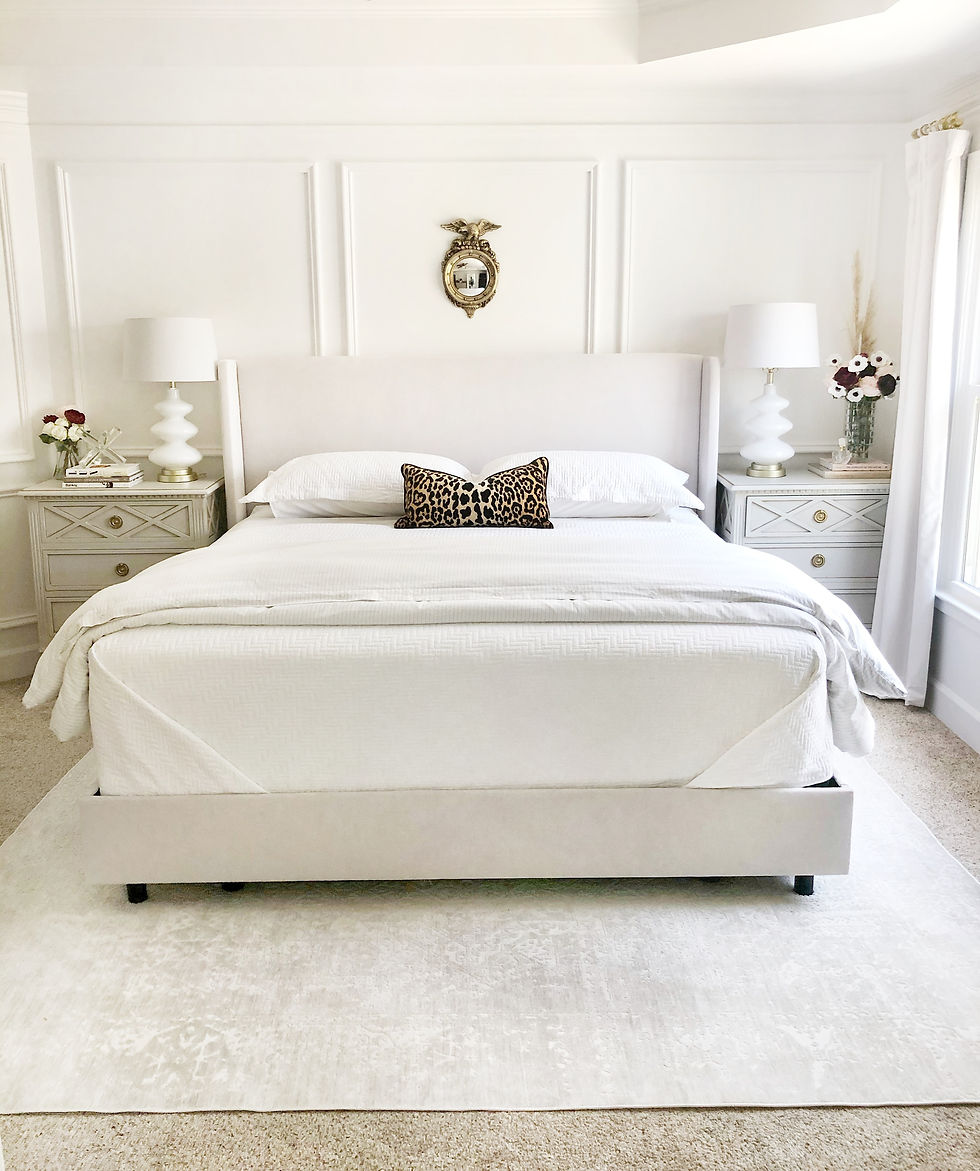
White sheets for short-term rentals aren’t a design preference. In professionally managed short-term rentals, they function as an operational standard tied directly to guest perception, turnover efficiency, and long-term consistency. Bedding is not selected based on what looks good in photos or what feels soft out of the package. It’s selected based on how it performs across repeated stays and how clearly it communicates that a space has been properly reset.
Guests rarely articulate this directly, but they register it immediately upon arrival. White linens signal that the bed has been freshly prepared, inspected, and held to a consistent standard. That signal matters because guests are making a judgment about cleanliness within seconds of entering the space. When darker or patterned linens are used, that clarity is reduced. Even if the property is clean, it does not always read that way, and perception—not intention—is what drives reviews.
Why Short-Term Rental Bedding Standards Matter More Than Design
Bedding is one of the most repeated and visible touch-points in a guest stay, and it carries more weight than most hosts realize. Unlike décor elements that fade into the background, the bed is immediately evaluated. Any inconsistency in presentation, fit, or cleanliness becomes a focal point, particularly in natural light or under direct overhead lighting.
White linens simplify this process by removing variability. They perform consistently across different lighting conditions, make wear or staining immediately visible during turnovers, and allow for a uniform presentation across multiple bedrooms or properties. This reduces friction for housekeeping teams and creates a predictable standard that can be maintained over time. Rather than relying on visual styling to carry the experience, the property communicates quality through repeatable execution.


Why White Wins
Versatility: White linens are the ultimate chameleons. They seamlessly blend with any decor style, from minimalist modern to rustic charm.
Cleanliness: There's no denying that white makes stains more visible, but it also makes them easier to remove. A quick soak The Pink Stuff with Oxipowder Stain Remover helps combat stubborn stains in a pinch!
Luxury Appeal: Crisp white sheets are synonymous with luxury. Guests associate them with high-end hotels, creating a sense of indulgence.
Hotel Number One Choice: White linens are the ultimate chameleons, seamlessly blending with any decor style, from minimalist modern to rustic charm. Setting the standard for luxury hotels worldwide, white sheets convey a sense of cleanliness and elegance that instantly elevates any space.


When to Break the Rules
While white linens are a fantastic foundation, there are instances where themed linens can enhance the overall guest experience. For example:
Beachfront Properties: Soft blues and sandy neutrals can evoke the coastal vibe.
Mountain Retreats: Earthy tones like greens and browns can complement the natural surroundings. Cabins are the perfect opportunity to have fun with seasonal favorites like this Cabin Themed Crib Set for traveling littles.
Whimsical Spaces: Playful patterns or bold colors can add personality to a unique space. Use these fun Cowboy Themed linens or a cactus themed set to lend a nod to your ranch property rental or these
By carefully selecting your linens, you can create a space that not only looks incredible but also provides a comfortable and memorable stay for your guests.
What Materials Actually Perform for White Sheets in Short-Term Rentals
Material selection is where many hosts unintentionally compromise both guest comfort and operational efficiency. In hospitality environments, linens are chosen based on how they behave after dozens of wash cycles, not how they feel when first removed from the packaging. Durability, breathability, and structural integrity are prioritized because those factors directly impact both guest satisfaction and replacement costs.
For that reason, 100% cotton remains the industry standard. It offers a level of breathability that regulates temperature effectively, holds its shape through repeated laundering, and delivers the crisp, structured appearance that guests associate with hotel-quality bedding. Percale weaves, in particular, are widely used because they maintain that clean finish over time rather than softening into a less defined look.
Other materials introduce tradeoffs that tend to surface after repeated use. Microfiber, while initially soft, retains heat and is prone to pilling, which quickly diminishes both comfort and visual quality. Bamboo and blended fabrics can feel smooth, but they are often more delicate and less consistent across wash cycles, making them harder to standardize across multiple sets. Sateen weaves offer a softer feel but tend to lose structure faster, resulting in a presentation that reads less crisp and more worn over time. These differences may not be obvious on the first stay, but they accumulate, and guests notice the result even if they cannot identify the cause.
Thread Count—and Why Higher Isn’t Necessarily Better
Thread count is often used as a proxy for quality, but in short-term rentals, it is frequently misunderstood. Higher thread count is typically associated with softness, yet that softness comes with tradeoffs that do not align with hospitality use.
Most hotels operate within a 200 to 400 thread count range because it balances durability, breathability, and structure. Linens within this range maintain their integrity through repeated laundering, retain a crisp appearance, and avoid the heavier feel that can come with denser weaves. In contrast, higher thread counts often result in thicker fabric that traps more heat and breaks down more quickly under consistent washing. While they may feel more luxurious initially, they are less suited to environments where linens are in constant rotation.
In practice, thread count is less important than how the fabric performs over time. Properties that prioritize longevity and consistency tend to avoid chasing higher numbers and instead focus on materials and weaves that hold up under real operating conditions.
What I Actually Use in Vacation Rentals I manage and Why
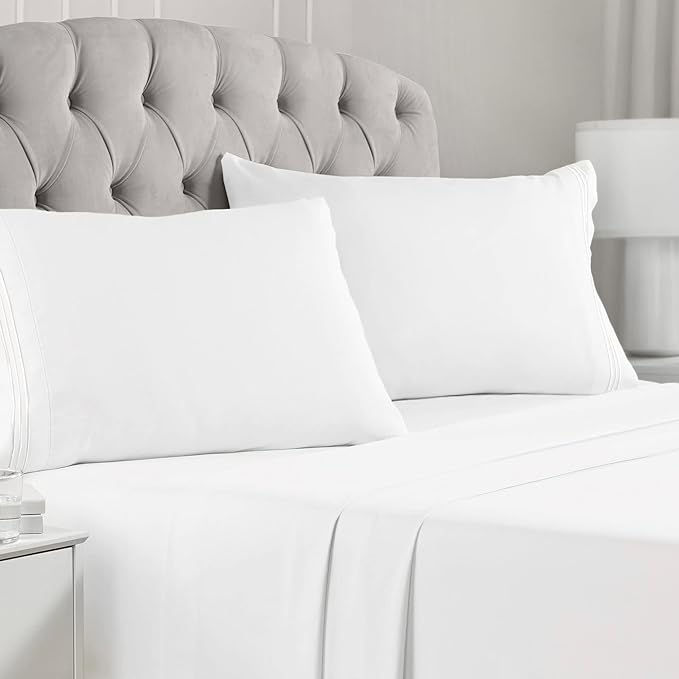
In application, the goal is to select linens that support turnover efficiency and maintain a consistent presentation without requiring constant adjustment or replacement. One of the more reliable options I’ve used is the Hotel Signature collection available through Costco. The value isn’t in the branding, but in how the product is constructed to meet practical demands.
The fitted sheets are reinforced along the edges, which addresses one of the most common failure points in bedding. Because sheets are repeatedly stretched during turnovers, that reinforcement significantly extends their lifespan. The 18-inch deep pocket accommodates a wide range of mattress profiles, allowing the sheet to remain secure without constant repositioning between stays.
Additional design details further reduce friction during housekeeping. The sheets are labeled by orientation, which speeds up bed-making and reduces inconsistencies across turnovers. The flat sheets are slightly oversized, allowing for a cleaner, more structured presentation that aligns with hotel standards. Including four pillowcases per set also supports uniformity across bedrooms, eliminating the need to mix and match inventory.
Individually, these features might seem minor. In practice, they contribute to a more consistent and efficient operation, which ultimately translates into a more polished guest experience.
The Standard Behind the Decision
High-performing short-term rentals are built around repeatable systems, not one-time presentation. Bedding is one of the clearest examples of this. The objective is not to optimize for how a space looks when it is first staged, but for how it performs after dozens of turnovers, under varying conditions, and across different guest expectations.
White linens remain the standard because they consistently meet those demands. They support operational efficiency, reinforce guest confidence, and maintain a level of presentation that aligns with hospitality benchmarks. Over time, those factors compound, influencing both reviews and long-term performance.
Most hosts focus on how a property appears in photos. Professionally managed properties focus on how it holds up in reality. That distinction is where guest perception—and ultimately revenue—is determined.
Most hosts evaluate linens based on how they look when the property is staged.
Professionally managed properties evaluate them based on how they perform across every stay, every turnover, and every guest expectation.
That difference is where consistency is built—and where most listings begin to separate in both reviews and revenue.
This article contains affiliate links. If you purchase through these links, Dream Stay Vacation Rentals may earn a commission at no additional cost to you. All products referenced are selected based on real-world performance in short-term rental operations.


Comments